Andy Warhol
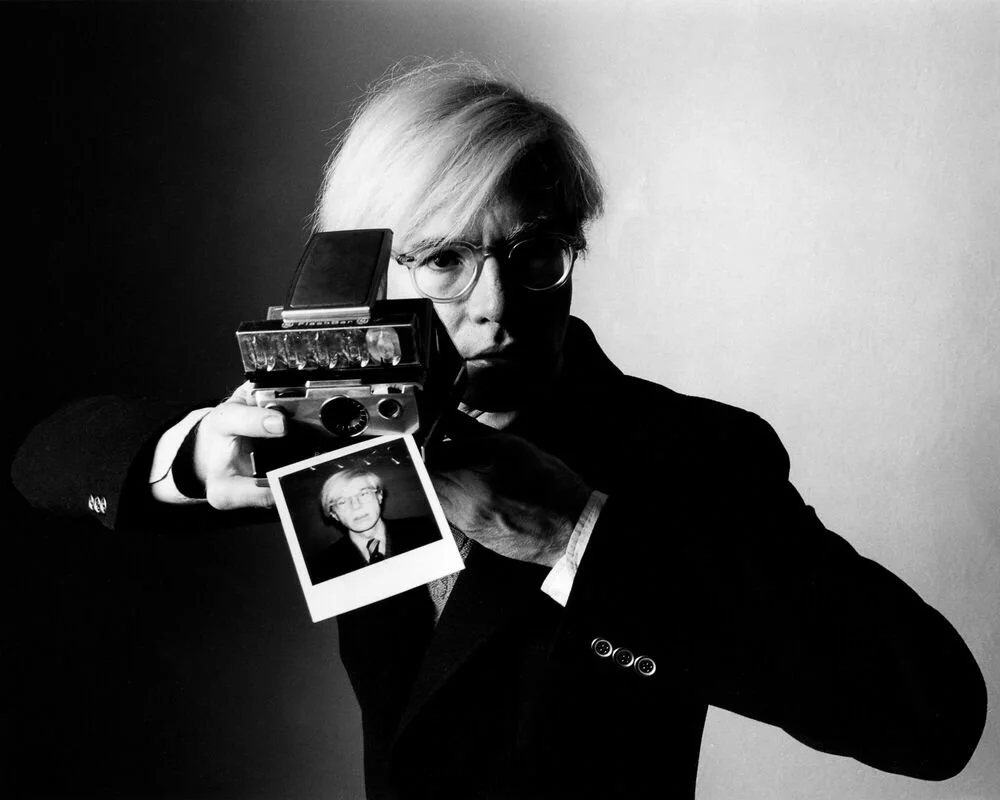

Some artists leave their mark on their era. Andy Warhol redefined it.
Born in 1928 in Pittsburgh, far from the great cultural capitals, he grew up with a singular intuition: that the image would become the dominant language of the modern world.
In 1962, Warhol presented his famous Campbell’s Soup Cans. This is not just painting: it is a statement — Warhol asserts that art and consumer culture are now inseparable, and that even a can of soup can become an icon.
Two years later, in 1964, he founded the Factory, his studio-laboratory. There, he established an almost industrial mode of production, transforming the artist into a true producer of images. It was a revolution: he was no longer just a painter, but a maker of icons.
In 1968, he survived an attempted assassination. This traumatic event triggered a new series, Death & Disasters, where he confronted themes already present in his work — fragility, violence, mortality — with a new, uncompromising intensity.These unsettling works captivated the art market by revealing how powerful and disturbing a mediated image can be.
Andy Warhol passed away in 1987 at the age of 59. And at that moment, he entered posterity.
A central figure of Pop Art and contemporary art, his production, his ideas, his entire way of thinking about the image continue to exert a decisive influence.
Andy Warhol did not only transform art: he transformed our gaze, and our way of assigning value to images. His vision remains more relevant today than ever.
His work resonates across the world — in the most prestigious private collections, in galleries, in museums, and in the frenetic arena of auction houses.